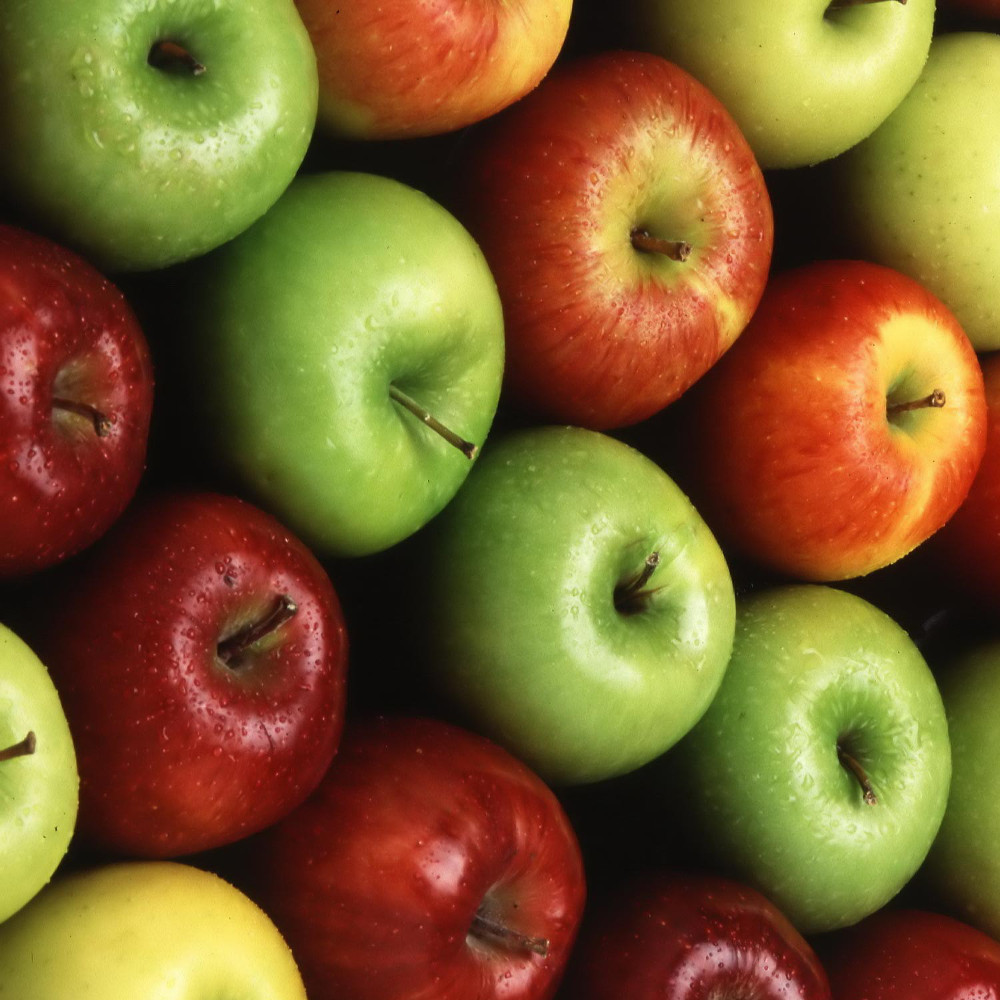
There’s nothing like picking fresh apples from the trees in your yard, and this year we offer over 20 different varieties to choose from. You can pick apples from July to early November with these selections.
Several of these are disease resistant varieties that are easier to grow without chemical sprays if you’re looking at the organic or lower effort route.
Apples are offered on different rootstocks that will determine the ultimate size of the tree and the type of soil it will grow in. If your goal is to grow high quality fruit for human consumption, stick with dwarf or semi-dwarf roots since smaller trees are much easier to maintain, and it can all be done without using a ladder. However, if your soil is very sandy, the dwarf roots won’t perform well because they don’t have a large enough root system to feed a tree loaded with fruit. The larger growing rootstocks are well suited for light ground, and also do well on heavier soils. If you are planting food plot apples, plant semi-dwarf and large growing roots, otherwise the deer will eat your dwarf tree (only once though). Apple trees on semi-dwarf rootstock should be kept 8′-12′ for high quality fruit production, but will grow 14′-16′ tall if left un-pruned, so they are suitable for wildlife food plots.
With more than 25 different varieties offered this year there should be something here for everyone.
Most of these apples will begin bearing fruit in 2-3 years if cared for properly.
ALL APPLE TREES ARE PRICED AT $34.00 each
.
Ambrosia – this is a newer variety that was discovered growing in British Columbia, Canada in the early 1990s. Until 2018, these could only be grown by orchards licensed by the variety’s patent holder to grow it, but the patents have expired in the U.S. and Canada, so now everyone can enjoy this wonderful apple. Fruit is medium-large, with half red over a beautiful soft yellow background color. The cream colored flesh is crisp and juicy, and very sweet with low acidity. It also does not brown quickly like many other apples do. Trees are hardy to zone 5, and fruit ripens in mid October. SOLD OUT
On semi-dwarf (10-12 ft. tall) rootstock
.
Chestnut Crabapple – this large fruited crabapple (1 1/2″-2″ diameter) makes a great food plot variety, and is also popular for human consumption with large fruit size and exceptional flavor. Chestnut is commonly planted as a pollinator for other apple varieties with its prolific white bloom, and is also very cold hardy. A great wildlife food plot variety that ripens throughout September. If you are planting food plots, be sure to include some of these!
SOLD OUT
On large(16′-20′) rootstock
Cortland – a very large, round, red over greenapple with snow white, non browning flesh. Cortlands are very sweet and juicy, and great for making sauce, pies, and all other purposes. This is a very productive variety that bears annual crops dependably. Ripens later in September into October. Although Cortland has been around for over 100 years, they are still highly sought after in the early fall. Trees are extremely cold hardy.
On large (15′ – 20′ tall) rootstock
Crimson Crisp – this is another disease resistant variety that produces large sized fruit that are 90% bright cherry red, and begins bearing at an early age. Flesh is very crisp and dense with a fantastic, sweet-tart flavor that sweetens even more in storage. Fruit ripens late September – early October and stores well. The trees structure is spreading and easy to care for. This is one of the nicest flavored newer apple varieties, and a great choice for organic growers because of its multiple disease resistance. A nice food plot variety also. SOLD OUT
On semi-dwarf (10′-15′) rootstock.
Empire – is truly a great apple. This cross of Macintosh and Red Delicious is superior to either of its parents. It was one of the most popular varieties grown in the 1970s and 80s in the midwest and northeast. Fruit is medium in size, and mostly red over green. Flesh is white, crisp, juicy, and of excellent flavor. No other apple has the flavor of Empire! Great for all uses. Trees are easy to manage and bear annual crops. Very cold hardy also. Ripens early October, and keeps well in refrigeration. Again, a great apple!!! SOLD OUT
On semi-dwarf (10′-12′) rootstock.
.
Enterprize – Is a newer disease resistant variety that produces large, deep red fruit with excellent keeping qualities. Ripening in mid October, the apples are firm and somewhat tart when picked, but after storing for a while develop a spicy flavor and have a great crunch. This is one of the easiest, best flavored apples you can grow. Trees grow strong and spreading and are annually productive. A good organic grower choice that is highly resistant to scab, cedar apple rust and fireblight. Enterprize is a great food plot variety that ripens in mid – late October
On large (16′-20′) rootstock
.
Franklin Cider – this great new cider variety has everything going for it. Small to medium fruit is green skinned with heavy brown russeting. White flesh is sweet with high tannin levels and is an excellent cider apple. It can even be eaten from the tree without choking you, which is unusual in cider apples. The tree is immune to scab, cedar apple rust, and highly resistant to fireblight. Tree is fast growing, early to begin bearing, crops annually, and is very cold hardy. If you are into cider, and hard cider, this variety is a must have. Ripens in mid October.
On semi-dwarf (15′-20′) rootstock
.
Fuji – a medium-large, mostly red over tan or green apple that is exceptionally sweet, juicy, and crunchy. Fuji has become one of the most popular apples, and in my opinion this is one of the worlds best apples. It can be stored into next spring in the fridge. Fruit must be thinned to achieve good size and bear every year. You can grow Fujis that look just like the ones in the grocery store. This is also a good food plot apple because the fruit hangs on the tree until late winter. A good shake of the tree will drop some apples for the animals when there’s nothing else to eat. Ripens in late October – November. SOLD OUT
On semi-dwarf (10-12 ft) rootstock
.
Gala – has become one of the most popular apple varieties over the last 20 years. They achieve a medium size in Michigan, with red striped over yellow skin, and very sweet, crunchy, and juicy yellow flesh. Gala begins to ripen in early September, and continues for a couple of weeks, They can be kept in cold storage for a couple of months.
On semi-dwarf (9′-12′) rootstock
Gingergold – this is a newer variety of golden delicious that starts ripening in mid August. It produces large, very juicy, crunchy, sweet with a hint of spice fruit about six weeks before regular golden delicious. It is one of the best early season apples I’ve grown. If you like goldens, and even if you don’t, this one is a must have. Truly an excellent apple!!!
On semi-dwarf root growing 10-12 ft tall
Granny Smith – everyone knows this apple for its green coloration and tart flavor. In Michigan, grannies often have a reddish cheek on the sunny side of the fruit. This is one of the latest ripening varieties (late October-early November), and will keep in storage until the following spring. Granny Smith is an annual bearer of large fruit. SOLD OUT
On semi-dwarf (10′-12′ tall) growing rootstock
Honeycrisp – everyone loves this one. It’s sweet, juicy, and super crisp-crunchy. Trees are very cold hardy, and if you can keep from eating them, the apples store very well. Produces large red over green fruit and crops annually. This has become the most sought after and expensive apple I’ve ever seen. If you’ve never tried one you’re really missing out!!!! Ripens in mid-late September. Honeycrisp fruit hangs on the tree for a very long time after it’s ripe, so great for food plots also. Honeycrisp shows good resistance to scab disease, so a good choice for organic growers.
SOLD OUT
On semi-dwarf (10′-12′) rootstock
.
Idared – this heirloom apple is still highly sought after in the late fall when they ripen. Most orchards don’t grow them anymore, as the newer varieties seem to be where the money is at. Ida’s are a large apple, half red over green, and keep into late winter in cold storage. These apples are quite tart when first picked, but mellow to a nice sweet/tart balance after being stored a while. These are famous for making pies, and cider. Idared is a variety that always seems to set a decent crop, even when other varieties are lost to late spring freezes.
On large growing root(15′-20′ tall).
.
Jonamac – this cross of Jonathan and Macintosh is one of the most highly flavored apples in the early season. They grow to medium size, with appearance similar to Macintosh, but a flavor that is much more intense. Jonamac is an excellent pollinizer for most apple varieties, and seems to always set a crop even in a frosty spring. This is a great old variety.
On semi-dwarf (10′-12′) rootstock
..
Liberty – this is another variety that is very disease resistant and easy to grow. Fruit is large, red and round with a sweet-tart flavor and crunchy yellow flesh. I can’t say enough about this variety that ripens in late September-early October and keeps for a couple of months in the fridge. Easy to manage trees are early to begin bearing and produce heavy annual crops. This is one of the easiest apples to grow and even with a lot of neglect will still produce nice fruit. A great organic choice, also a nice food plot apple.
On semi-dwarf (10-12 ft) and large (16′-20′) rootstock.
Macintosh – is an excellent early fall variety that ripens in mid – late September. Medium – large in size, Macs are mostly red over a green background with snow white flesh that is extremely sweet when fully ripe. A great sauce and fresh eating apple. Although this variety is over 200 years old, it’s still one of the most popular apples grown in Michigan. Very cold hardy also.
On semi-dwarf rootstock growing 10-12 ft. tall.
.
Northern Spy – the old Northern Spy apples are large and red over green in color, with a flattened shape, and make the best pies. Every old farm had a Spy tree because the apples would keep in the cellar until the following summer. This variety has been grown in the midwest and northeast for over 100 years, and is still highly sought after. Apples ripen in mid October, and are available on semi-dwarf root stock so you don’t have to wait 15 years for your first fruit. This variety is very cold hardy, and I’ve seen trees that were said to be over 100 years old!!!
On semi-dwarf (10′-12′) rootstock
.
Nova Spy – is a great disease resistant apple that is very similar to Northern Spy in appearance, flavor, and ripening season. Nova Spy hails from Canada, so the tree is very cold hardy. It also begins producing at a younger age than Northern Spy. This is a great variety for organic growers with multiple disease resistance. Ripens in mid October, and keeps until the following spring in cold storage. A great food plot variety. Very easy to grow. SOLD OUT
On large growing (16′-20′ ) rootstock.
.
Ruby Rush – is an exciting new, disease resistant variety that is highly resistant to apple scab and cedar apple rust. Fruit is beautiful, mostly bright red with crisp, juicy, and very crunchy, yellow flesh. Flavor is spicy, mostly sweet with a tiny bit of tartness. Enterprise and Goldrush are the parents of this new variety, so it will likely keep for long periods. SOLD OUT
On semi-dwarf (10′-12′) rootstock.
Wolf River – is famous for its size, often 6″ across. This heirloom apple originated in Wisconsin in the 1880’s, and has excellent cold hardiness and apple scab resistance. Wolf Rivers are half red blushed over green, make excellent pies, sauce, and dry with minimal shrinkage. They ripen throughout September, and will impress everyone you give them to with their enormous size. Just a few of them will make a nice pie! Trees are strong, rapid growing. Good food plot variety too. SOLD OUT
On large (16-20ft) rootstocks
.