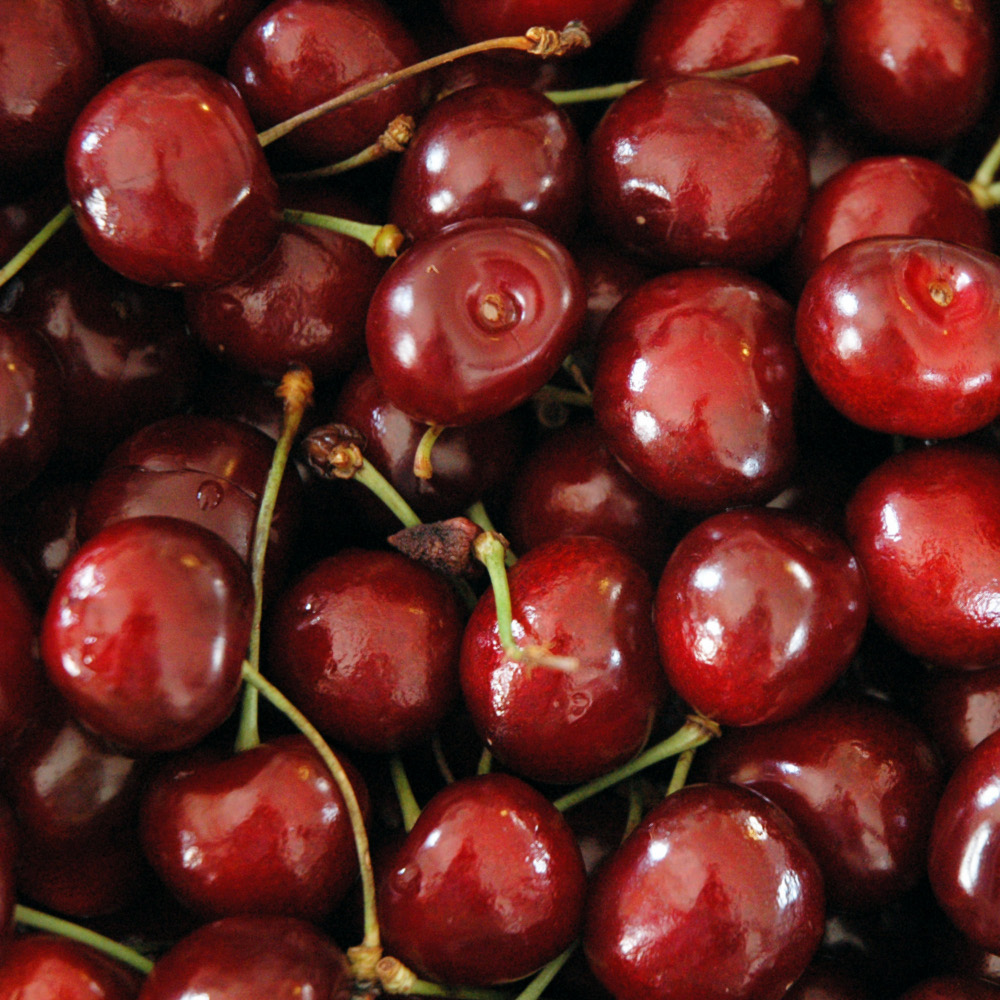
Cherries are often more challenging than other tree fruits to grow, but the reward of picking them from the tree in your yard makes it worth the effort required to do it.
We offer cherry trees on semi-dwarf rootstocks which will produce a 12′-15′ tree if you don’t keep them pruned to a manageable and net-able 8-10ft. height. If you have a tall cherry tree loaded with fruit, you will feed most of it to the birds, since it’s nearly impossible to put netting on a tree that’s tall. Although cherry trees are available on dwarf rootstocks, they produce trees that are very high maintenance and I don’t believe the average person is looking for that much of a challenge. Tart cherries are smaller growing trees, reaching around 12′ tall.
We do not offer the variety Bing. Even though the tree will grow in Michigan, the cherries crack with the slightest rainfall, and the fruit quickly rots. Most dark sweet cherries are sold as Bings.
The varieties of cherries offered are proven to perform well under Michigan growing conditions. They have good tolerance to rain induced cracking, and these varieties are also cold hardy.
Some of these varieties are self fertile which means you only need one tree to produce fruit, others require two different varieties for proper pollination or they will not set fruit. They are all listed as self fertile or pollinator required. Sweet cherries can only pollinate other sweet cherries. Tart cherries are self fertile and can not pollinate sweet varieties.
Space sweet cherry trees 18 – 20 feet apart, and tart cherries 12 – 15 feet apart.
ALL CHERRY TREES ARE PRICED AT $34.00 ea.
.
SWEET CHERRIES
Attika – this cherry was developed in Europe, but has been widely planted in the great lakes region over the past decade or so with great results. The dark red fruit is firm, juicy and highly flavored. These cherries have very good rain induced crack resistance, and their long stems make picking easy. Attika requires another sweet cherry for pollination.This is an excellent variety that ripens in July.
Requires a pollinator
Benton – is a great, newer variety that produces very large, dark cherries with intense flavor and firm flesh. The fruit has nice long stems which make picking much easier, and has good rain induced crack resistance. This variety is becoming one of the most planted commercial varieties in Michigan for all these great attributes and their exceptional flavor. Benton is also self fertile, and a good pollinator for other sweet cherry varieties. Trees are on a semi dwarf rootstock that requires well drained ground, preferably with some slope to it. Ripens mid July.
Self fertile, requires no pollinator
.
Kristin – is the most cold hardy sweet cherry available. This variety has been successfully grown in Norway and Montana, so should do well anywhere in Michigan. Fruit is very large, dark red-black, moderately firm, and crack resistant with a great flavor. An excellent, reliable choice for Michigan Ripens in early-mid July.
Requires a pollinator
.
TART VARIETIES
Jubileum – this newer sweet-tart cherry from Europe has been widely planted in Michigan with great success. If picked when they first start to color red, they are very tart like Montmorency, but if left to hang a few days longer, the fruits change to a deep red/burgandy color, and develop a sweetness that is perfect for fresh eating. Fruit ripens in July, sizes well, and can be used for any purpose. Trees grow 10′-12′ tall, but can be pruned lower for easy netting.
Self fertile, will not pollinate sweet cherries.
Montmorency– is considered the standard for tart cherries. Fruit is bright red and very tart, and is used for pies, preserves, making booze, and even fresh eating by folks who are not faint of heart! Trees are early to begin bearing, and grow 10-12 ft. tall. Ripens late July-August This rootstock is for well drained soil only, preferably with a little slope. Will not pollinate sweet cherries, and does not require a pollinator.
Self fertile, no pollinator required
.
.
.
.
.